Buscar

click click

ART TEACHERS SMKCS

ART TEACHERS SMKCS

Merentas Desa 2011

Merentas desa SMK Convent Sentul pada 5 mac yang berlangsung secara gilang gemilang d Taman Tasik Titiwangsa...mari kita lihat candid..Jom
Tahniah Mekalah

Pose menarik daripada Ketua Panitia Seni Visual Pn.Intan...peeweett
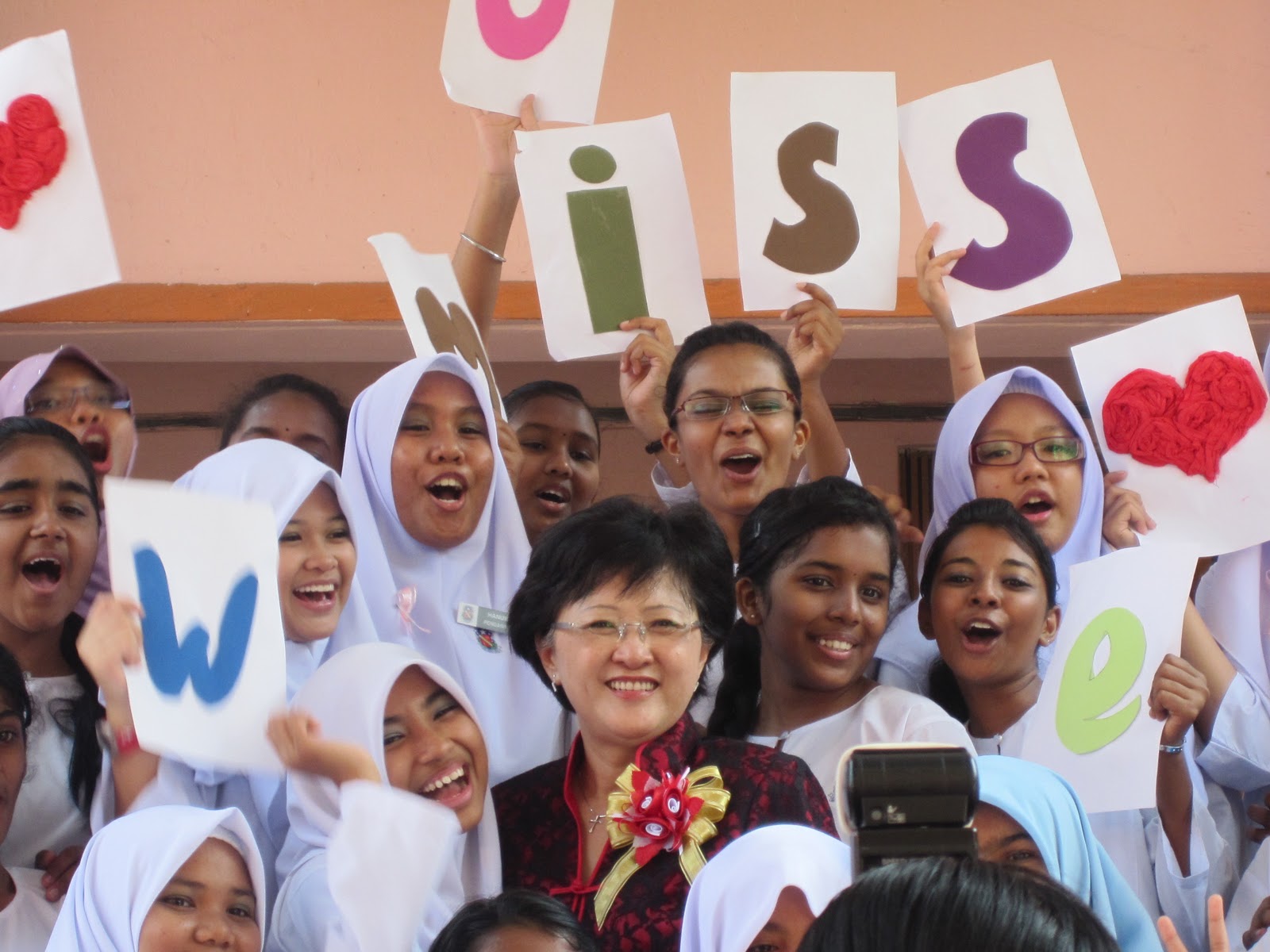
Amboi bersemangatnya pelajar SMKCS nie...
Guru Guru Berposing bersama Pn.Pengetua
Tahniah Kepada semua pemenang.

Please Promote Our Art Blogspot..We Sharing Is Caring


Teaching students about art is a good idea—here's why:
  • It's been proven that early exposure to visual art, music, or drama promotes activity in the brain.
  • Art helps student understand other subjects much more clearly—from math and science, to language arts and geography.
  • Art nurtures inventiveness as it engages children in a process that aids in the development of self-esteem, self-discipline, cooperation, and self-motivation.
  • Participating in art activities helps children to gain the tools necessary for understanding human experience, adapting to and respecting others' ways of working and thinking, developing creative problem-solving skills, and communicating thoughts and ideas in a variety of ways. 
Thanks for follower..dear my lovely student please promote Panitia Seni blog to all of your friends....here we sharing everything about art... Think...Without art is what...?

Faux Cake..soft pastel hues

This is we called is as Faux Cake
Hanya untuk pandang2 sahaja..tak boleh makan okey :)
 Untuk berkongsi kepada semua kerana seni itu indah...hari ini cikgu belajar benda baru...Cikgu masuk kelas membuat FauxCake.itulah hasilnya...Kelas ini berlagsung selama 2 jam..bahan asas bagi cake ini ialah pastel of paris...Sangat menarik mendeco cake ini. Apa yang menarik cake ini boleh di simpan walaupun 10 tahun pom gerenti semut tak nak makan.. Faux cake ni sgt sesuai untuk di jadikan hadiah..boleh di simpan sebagai kenangan...Harga pasaran adalah RM 50...kalaw bekenan boleh order on line dengan cikgu yew...
DI MANA ADA KEMAHUAN DISITU ADA JALAN.... ini cake comey2 yang sempat cikgu snap tadi...Jom tengok
Cute nya cake2 ni

Cup Cake yang comey seperti mau makan saja..ingat pandang2 saja ok..makan tak boleh !

In Memories...Pn.Ong Sian

Entry kali ini ialah sekitar majlis perpisahan Pn.Ong Sian PK KOKO ..Beliau ialah  guru yang di senangi dan sayangi ramai baik di kalangan guru mahupun pelajar...sangat senang berkerjasama dengan Pn.Ong kerana tunjuk ajar beliau,..Apa yang penting Pn.Ong nampak sungguh AWEK MUDA...jika d lihat luaranya beliau kelihatan sungguh muda dan lagi bergaya..mungkin kerana cara beliau berkerja..sangat di senangi ramai. Pn.Ong sentiasa mengukir senyum walau di mana sahaja bertemu denganya,melihatnya seperti tenang sahaja... langsung tidak menyusahkan guru guru yang berkerja denganya, tiada langsung rasa STRESS jika berkerja bersama  beliau...beliau juga seorang yang pemurah,DOMINOS pizza sangat sinonim dengan Pn.Ong..jikalau ada event selalunya adalah Dominos dr Pn.Ong buar guru2 tersayang...
Mari kita lihat gambar kenangan sekitar majlis perpisahan Pn .Ong
sangat meriah okey..
Cikgu pakai baju boria..apa yang penting En.Mazwan pun posing sama

Kompang di palu...seperti mau bersanding lagi sekali

sungguh meriah..pelajar menunggu Pn.Ong d sekeliling sekolah....Meriah

BUKTI..see sentiasa tersenyum i like it

Cik Arparnah selaku ketua Persembahan...thanks to Kelab koir Form 3

Guru petang dengan persembahanya..sealed with a kiss..muah muahh


Kami guru Malaysia


we miss you..dari kelab koir


happening...

bye bye

INI YANG PENTING..PN.INTAN KP PSV..JUGA DI SUKAI RAMAI

Barisan guru2 muda..


Hari Kraf Kebangsaan 2011

Hari Kraf Kebangsaan 2011 (National Craft Day)

Hari Kraf Kebangsaan 2011 merupakan rangkuman pelbagai aktiviti istimewa promosi dalam promosi selain dari aktiviti utamanya iaitu jualan produk kraf. Selari dengan perkembangan teknologi terkini dalam bidang kraf, pameran penggunaan teknologi dan bahan baru akan dipertontonkan kepada umum contohnya mesin pemati warna untuk industri batik. Selain dari itu Pameran Kelengkapan Rumah, Pameran Seni Ukir Dalam Seni Bina dan Pameran Kraf Warisan Teknologi turut dipamerkan.

Elemen pendidikan yang diterapkan pada Hari Kraf Kebangsaan direalisasikan melalui aktiviti Pendidikan Kraf dan Apresiasi Kraf yang merupakan program perkongsian idea dan ilmu yang  akan memfokuskan perbincangan kepada Teknik Pembuatan Logam Bahan Campuran Seramik, Tenun Palembang dan Aplikasi Pewarna Glaze. Sebanyak enam kertas kerja akan dibentangkan sebagai pencambahan ilmu.

Pengunjung-pengunjung Hari Kraf Kebangsaan berpeluang melihat sendiri pembuatan songket dan tenunan melalui aktiviti demonstrasi kraf tenunan.  Hari Kraf Kebangsaan juga memperlihatkan penglibatan di peringkat antarabangsa melalui demonstrasi dari negara Filipina Tenunan Serat Nanas, Indonesia Tenunan Limar, Bangladesh Tenunan Jambadi dan Tenunan dari negara Uzbezkistan dan China.

Peluang usahawan-usahawan kraf memasarkan produk ke peringkat antarabangsa juga terbuka luas dengan penganjuran aktiviti perjumpaan pembeli. Sebanyak 30 pedagang dari luar negara akan menyertai aktiviti ini dan berurus niaga bersama pengusaha kraf tempatan.Persembahan Kesenian dan demonstrasi masakan kuih tradisional menjadi pelengkap kepada Hari Kraf Kebangsaan. 
Tarikh :23 Feb 2011 - 07 Mac 2011
Lokasi :Kompleks Kraf Kuala Lumpur

Tokoh Seni Malaysia

SYED AHMAD JAMAL, THE MALAYSIAN NATIONAL ART LAUREATE


Dato' Syed Ahmad Jamal was born in Bandar Maharani, Muar, Johor in 1929. He received his primary and secondary education in the Malay and English medium respectively in Johor Bharu. His higher education was gained abroad - Chelsea School of Art (1951-1955), Institute of Education, London University (1955-1956), School of Art Institute Chicago (1963-1964) and University of Hawaai, Honolulu (1973-1974). Dato Syed Ahmad Jamal, the Malaysian National Art Laureate, has won acclaim and prizes locally and internationally. He won 1st prize in the Johor Art exhibition (1950), Summer Competition - Chelsea School of Art London (1954), Federation Art Competition - Kuala Lumpur (1962), and the National Bank of Malaysia Mural Competition. Dato' Syed Ahmad Jamal has contributed greatly towards Malaysian Art - in his teachings, writing and role as art curator, his service as as board member and committee members of art related organistions, particularly that of the Malaysian National Art Gallery. For his vast contribution, Dato Syed Ahmad Jamal was awarded the National Art Award in 1995 by the Malaysian Government, which honours him as a National Artist.

SIDANG ROH


MANDI LAUT


KG SUNGAI CINCIN


HARAPAN


JENDELA DI ANGKASA


CHAIRIL ANWAR


DUEL IN THE SNOW


BATTERSEA PARK II


CATCH A FALLING STAR

MALAYSIAN CONTEMPORARY ARTIST

AWANG DAMIT AHMAD
Awang Damit Ahmad was born in Kuala Penyu, Sabah in 1956. He studied fine art at UITM (School of Art and Design of ITM) and was chosen as the best student in 1983. He furthered his studies in painting at the Catholic University of America in Washington DC in 1988 and was awarded a Master's Degree in Fine Art in 1990.

Awang now lectures in fine art at UITM. He has held positions as the Curator of the Art Gallery and Head of the Fine Arts Department before being appointed an Associate Professor in 2000.


IRAGA PERJALANAN UTARA II/08
Mixed On Canvas (2008) - 120cm x 120cm


IRAGA PERJALANAN UTARA YANG RAPUH DAN TERHAKIS
Mixed On Canvas (2008) - 100.5cm x 100.5cm

STAGES OF ARTISTIC DEVELOPMENT

LOWENFELD'S

STAGES OF ARTISTIC DEVELOPMENT


1. SCRIBBLE

(2 to 4 years)
The Scribble stage is made up of four sub-stages. (a) Disordered - uncontrolled markings that could be bold or light depending upon the personality of the child. At this age the child has little or no control over motor activity. (b)Longitudinal - controlled repetitions of motions. Demonstrates visually an awareness and enjoyment of kinesthetic movements. Circular - further exploring of controlled motions demonstrating the ability to do more complex forms. Naming - the child tells stories about the scribble. There is a change from a kinesthetic thinking in terms of motion to imaginative thinking in terms of pictures. This is one of the great occasions in the life of a human. It is the development of the ability to visualize in pictures.


2. PRESCHEMATIC

(4 to 6 years)
The preschematic stage is announced by the appearance of circular images with lines which seem to suggest a human or animal figure. During this stage the schema (the visual idea) is developed. The drawings show what the child perceives as most important about the subject. There is little understanding of space - objects are placed in a haphazard way throughout the picture. The use of color is more emotional than logical.


3. SCHEMATIC

(7 to 9 years)
This stage is easily recognized by the demonstrated awareness of the concept of space. Objects in the drawing have a relationship to what is up and what is down. A definite base and sky line is apparent. Items in the drawing are all spatially related. Colors are reflected as they appear in nature. Shapes and objects are easily definable. Exaggeration between figures (humans taller than a house, flowers bigger than humans, family members large and small) is often used to express strong feelings about a subject. Another technique sometimes used is called "folding over" this is demonstrated when objects are drawn perpendicular to the base line. Sometimes the objects appear to be drawn upside down. Another Phenomenon is called "X-ray". In an x-ray picture the subject is depicted as being seen form the inside as well as the outside.


4. DAWNING REALISM

(9 to 11 years)
Dawining realism is also known as the gang age. Group friendships of the same sex are most common. This is a period of self awareness to the point of being extremely self critical. The attempts at realism need to be looked at from the child's point of view. Realism is not meant to be real in the photographic sense rather than an experience with a particular object. In this regard this stage is the first time that the child becomes aware of a lack of ability to show objects the way they appear in the surrounding environment. The human is shown as girl, boy, woman, man clearly defined with a feeling for details often resulting in a "stiffness" of representation. Perspective is another characteristic of this stage. There is an awareness of the space between the base line and sky line. Overlapping of objects, types of point perspective and use of small to large objects are evident in this stage. Objects no longer stand on a base line. Three dimensional effects are achieved along with shading and use of subtle color combinations. Because of an awareness of lack of ability drawings often appear less spontaneous than in previous stages.


THE PSEUDOREALISTIC STAGE

(ll to 13 years)
In the previous stages the process in making the visual art was of great importance. In this stage the product becomes most important to the child. This stage is marked by two psychological differences. In the first, called Visual, the individual's art work has the appearance of looking at a stage presentation. The work is inspired by visual stimuli. The second is based on subjective experiences. This type of Nonvisual individual's art work is based on subjective interpretations emphasizing emotional relationships to the external world as it relates to them. Visual types feel as spectators looking at their work form the outside. Nonvisually minded individuals feel involved in their work as it relates to them in a personal way. The visually minded child has a visual concept of how color changes under different external conditions. The nonvisually minded child sees color as a tool to be used to reflect emotional reaction to the subject at hand.
Note:The above is a brief summary of the subject, for more information refer to the following book. With the exception of the illustrations all of the above content is from: CREATIVE AND MENTAL GROWTH, Viktor Lowenfeld, Macmillan Co., New York, 1947.

CARTA ORGANISASI PANITIA SENI

CARTA ORGANISASI PANITIA SENI